How In-Ear Headphones Are Quietly Damaging a Generation's Hearing, The Unseen Peril in Your Ears
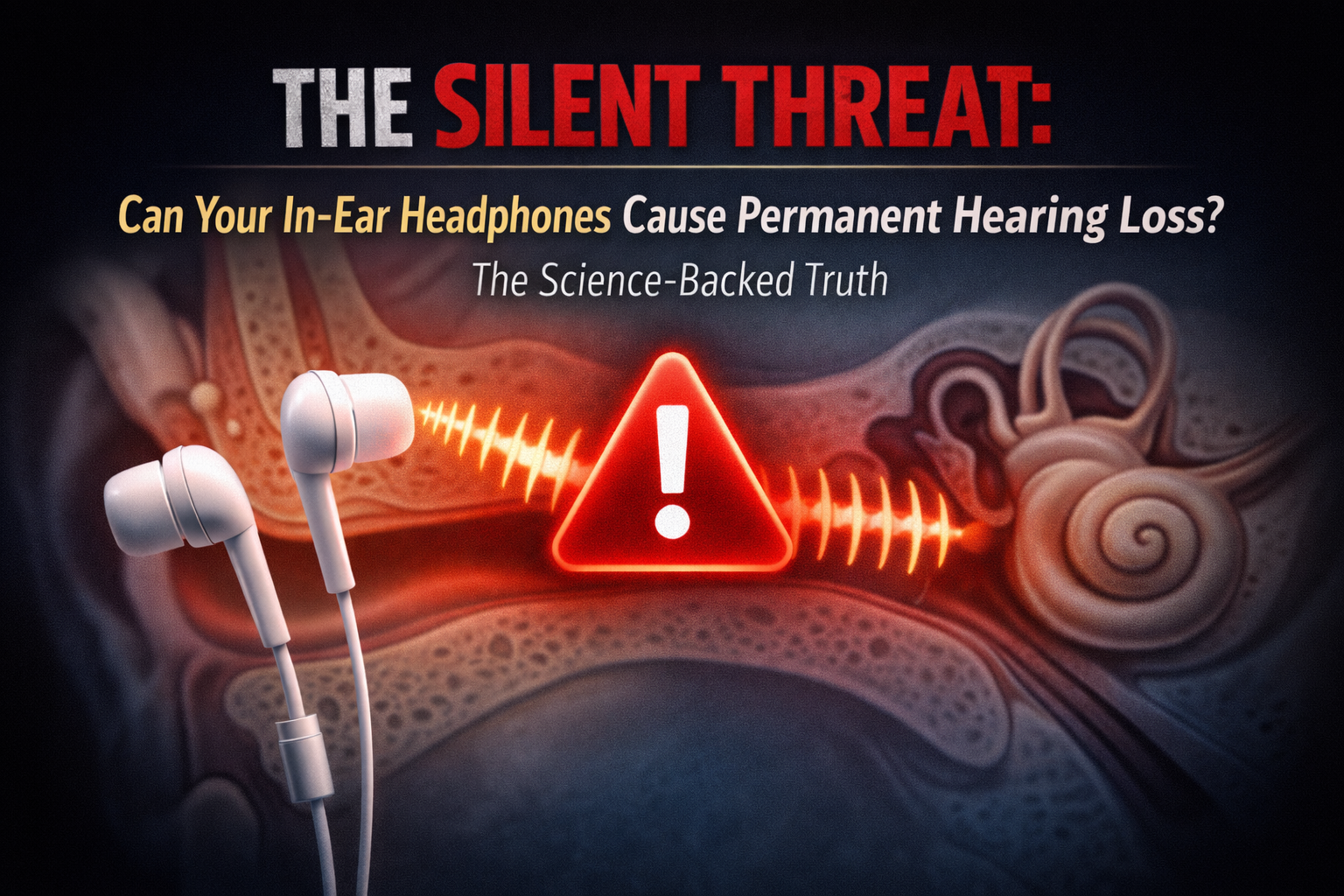
You slide them in, press play, and the world melts away. In-ear headphones the tiny sonic portals we use for hours each day deliver a private, immersive audio experience unlike any other. But at what cost? Mounting scientific evidence suggests that our love affair with personal audio is fueling a silent epidemic of noise-induced hearing loss (NIHL), particularly among younger generations. This isn't speculation; it's a public health concern backed by rigorous research. Let's separate fact from fear-mongering and examine the precise mechanisms of damage, the real-world data, and how to protect your most precious sense.
The Physics of Damage: How Sound Becomes Injury
Hearing damage from headphones isn't about "loudness" alone. It's a combination of intensity (volume), duration (exposure time), and proximity (in-ear seal).
The Decibel Danger Zone: Sound is measured in decibels (dB). Normal conversation is about 60 dB. The critical threshold for risk begins at 85 dB. At this level, the U.S. National Institute for Occupational Safety and Health (NIOSH) recommends a maximum exposure of 8 hours per day. The relationship is logarithmic, not linear.
At 88 dB, safe exposure drops to 4 hours.
At 91 dB, it's 2 hours.
At 100 dB (common peak volume in headphones and at concerts), safe exposure is just 15 minutes.
The Proximity Problem: In-ear headphones (IEMs) sit directly at the entrance of the ear canal, creating a seal. This seal does two dangerous things:
Blocks Ambient Noise: This allows users to listen at lower perceived volumes in noisy environments (a good thing), but often leads to volume creep in quiet settings as users seek intensity.
Increases Sound Pressure: The seal creates higher sound pressure levels (SPL) at the eardrum compared to over-ear headphones at the same device volume setting. The sound energy is delivered more efficiently and destructively to the delicate inner ear.
The Biological Breakdown – Killing Hair Cells: Inside your cochlea are roughly 16,000 tiny, irreplaceable sensory hair cells. These are the microphones of your body.
Mechanical Shearing: High-intensity sound waves create violent fluid movement in the cochlea, physically bending and shearing these hair cells until they break.
Metabolic Exhaustion: The cells' efforts to process loud sound deplete their energy reserves and generate harmful oxidative stress (free radicals), leading to cell death.
The Tragedy: These cells do not regenerate in humans. Damage is cumulative and permanent. The first to go are those handling high frequencies, subtly blurring consonants (s, t, f, sh), making speech in noisy places hard to follow a condition often going unnoticed for years.
The Alarming Research: Data from the Front Lines
This isn't theoretical. The World Health Organization (WHO) has raised the alarm, estimating that over 1 billion young people worldwide are at risk of hearing loss due to unsafe listening practices.
The Volume Study: A 2022 systematic review published in the BMJ Global Health analyzed listening habits across 33 studies. It concluded that 23% of adults and 27% of minors were exposed to excessive noise volumes from personal audio devices. The study defined "excessive" using the WHO's recommended limit of 80 dB for 40 hours a week.
The "Hidden Hearing Loss" Phenomenon: Research from Harvard Medical School and MIT has identified cochlear synaptopathy damage to the connections (synapses) between hair cells and auditory nerves as a precursor to standard hearing loss. This can occur at lower volumes than those that kill hair cells and results in difficulty understanding speech in noise, even with a "normal" audiogram. It's a stealthy early-warning sign directly linked to headphone use.
The Tinnitus Connection: A 2021 study in Scientific Reports found a significant correlation between frequent headphone use, especially at high volumes in noisy environments, and the prevalence of tinnitus a persistent ringing or buzzing in the ears, which is often a direct symptom of hair cell injury.
In-Ear vs. Over-Ear: Is There a Safer Choice?
The form factor itself isn't the primary villain; it's the user behavior it enables.
In-Ear Headphones (Including Earbuds):
Higher Risk Factors: The seal increases SPL, and their portability leads to use in noisy environments (commutes, gyms, cafes), where users dangerously crank volumes to overcome 75-85 dB of background noise.
Potential Benefit: Good noise isolation can allow for safer listening levels if the user consciously keeps volume low.
Over-Ear Headphones (Noise-Cancelling):
The Safer Champion: Active Noise Cancellation (ANC) is a game-changer. By electronically canceling low-frequency ambient noise (plane engines, traffic rumble), they remove the need to blast volume. Studies, including one from the Journal of the Acoustical Society of America, have shown ANC headphones allow users to maintain comfortable listening levels 20-40% lower in noisy settings.
Physical Buffer: They sit farther from the eardrum, generally producing lower SPL at the same output.
Your Evidence-Based Hearing Preservation Protocol
The 60/60 Rule (The Gold Standard): Listen at no more than 60% of maximum volume for no more than 60 minutes at a time. Then, give your ears a quiet break.
Let Your Phone Measure: Use your phone's Health app (iOS) or a sound meter app (like NIOSH SLM) to get a rough idea of your listening levels. Aim to stay below 80 dB.
Embrace Noise Cancellation: If you listen in noisy places, invest in quality ANC over-ear or in-ear headphones. It's the single best purchase for your long-term hearing health.
Use Custom-Fit Ear Tips: For in-ear fans, custom-molded or high-quality foam tips (like Comply) provide better passive isolation, reducing the need for high volume.
Listen in Quiet: Whenever possible, use headphones in quiet environments where you can comfortably hear details at low volume.
Get a Baseline Test: Consider a baseline hearing test with an audiologist, especially if you're a frequent user. Monitor for early signs like tinnitus or muffled hearing after use.
So finally we came to this point:
Yes, in-ear headphones and all personal audio devices can and do damage hearing, but the fault lies less in the technology and almost entirely in user behavior.
The combination of high maximum output, the in-ear seal, and the pervasive use in noisy environments creates a perfect storm for cumulative, irreversible noise-induced hearing loss. The damage is slow, painless, and permanent.
Protecting your hearing isn't about giving up music or podcasts. It's about mindful listening. Treat your ears with the same respect you give your vision. You wouldn't stare at the sun; don't blast sound directly into your cochlea. The soundtrack of your life deserves to be heard clearly for all of it.
References:
World Health Organization (WHO). (2022). Global standard for safe listening entertainment venues. and (2019). Make Listening Safe initiative reports. [WHO.int]
Dillard, L. K., et al. (2022). Prevalence and global estimates of unsafe listening practices in adolescents and young adults: a systematic review and meta-analysis. BMJ Global Health, 7(11), e010501. (The key study quantifying the global risk).
Liberman, M. C., & Kujawa, S. G. (2017). Cochlear synaptopathy in acquired sensorineural hearing loss: Manifestations and mechanisms. Hearing Research, 349, 138-147. (Seminal paper on "hidden hearing loss").
Kumar, U. A., et al. (2021). Association between portable music player use and hearing loss among children and adolescents: A systematic review and meta-analysis. Scientific Reports, 11(1), 6857. (Links usage to tinnitus and hearing loss).
Flamme, G. A., et al. (2019). Headphone listening habits, hearing thresholds, and listening levels in a group of young adults. Journal of the Acoustical Society of America, 146(4), 2871. (Includes data on volume levels and risk).
National Institute for Occupational Safety and Health (NIOSH). (1998). Criteria for a Recommended Standard: Occupational Noise Exposure. (Source for the 85 dB/8-hour exposure limit and exchange rate).

Comments
Please login to post a comment
LoginNo comments yet. Be the first to comment!