The Unbreakable Phone That Broke: How Nokia Lost the World It Once Ruled

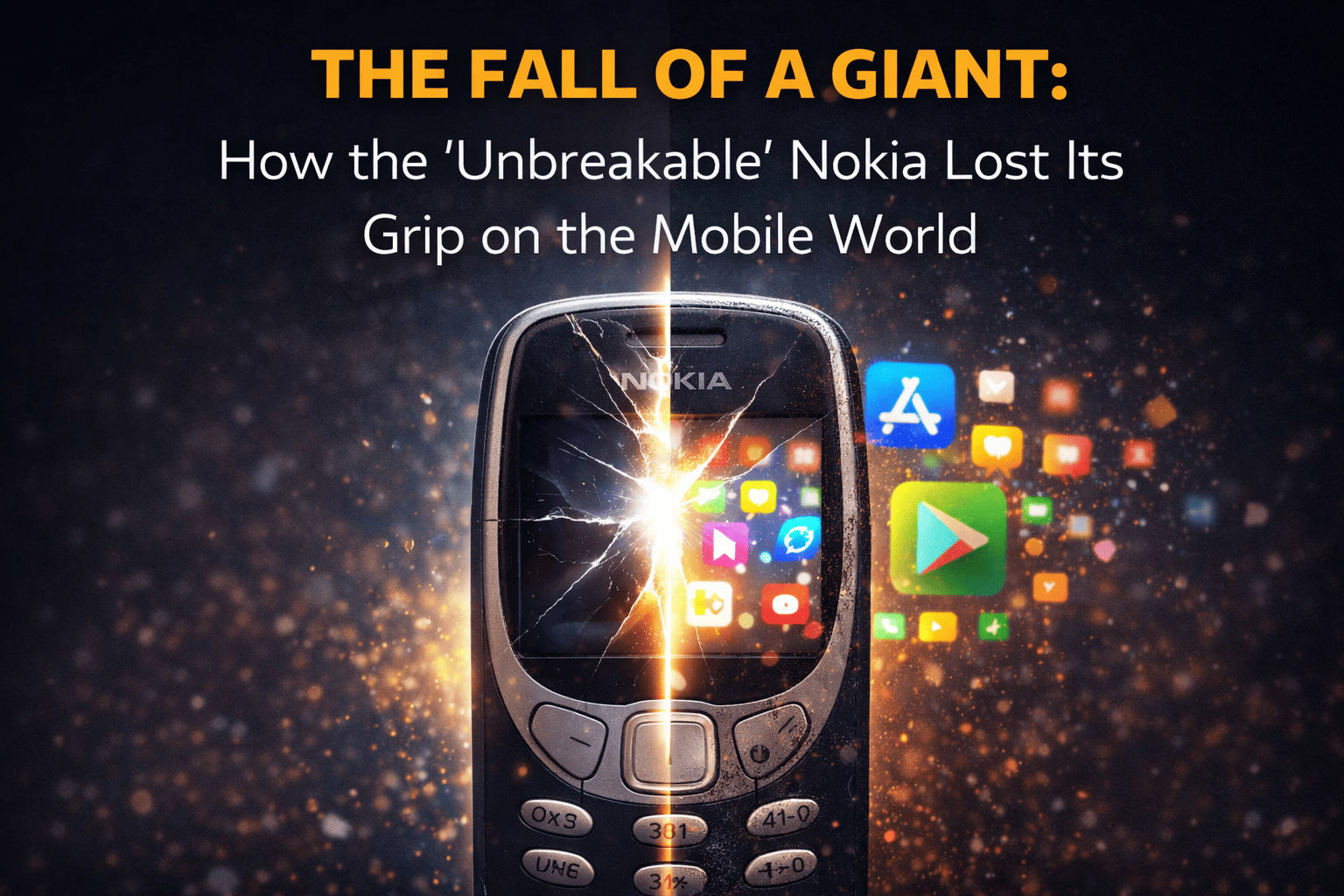
There’s a meme that endures for a reason: a picture of a battered, scratched, yet still-functional Nokia 3310 with the caption, “They don’t make them like they used to.” For over a decade, that phrase was Nokia. It wasn't just a phone brand; it was a global synonym for mobile telephony itself. From the sprawling markets of Mumbai to the frozen forests of Finland, the Nokia ringtone was the sound of connection.
Yet, this seemingly unshakable giant the world's #1 mobile phone maker for 14 straight years stumbled, fell, and never got back up. Its story isn't one of a single fatal blow, but of a slow, stubborn bleed caused by a perfect storm of strategic missteps, technological pride, and cultural inertia.
The Peak of Empire: How Nokia Ruled the World
Before its fall, Nokia’s dominance was absolute and built on undeniable strengths:
Indestructible Hardware: Phones like the 3310 and 1100 (the best-selling consumer electronics device in history) were legendary for their durability and week-long battery life. They were tools built for the real world.
Unmatched Supply Chain & Scale: Nokia could design, manufacture, and distribute phones tailored to every price point and region faster and cheaper than anyone. It owned emerging markets.
Intuitive Software (For Its Time): The Symbian OS was efficient, stable, and power-friendly. Paired with Nokia's clear menu system, it defined the pre-smartphone user experience.
Global Brand Trust: The name Nokia meant reliability. It had a market share exceeding 50% in some regions. It wasn't competing; it was defining the market.
The Fatal Flaws: The Five Reasons the Giant Fell
Nokia’s collapse was a tragedy in multiple acts, each a missed opportunity or a stubborn refusal.
1. The Symbian Albatross: Clinging to a Sinking Ship
While iOS and Android were designed from the ground up for touchscreens and the internet, Symbian was a legacy OS, patched and stretched beyond its limits. It was a complex, fragmented platform that was notoriously difficult for developers to work on. Nokia’s immense investment in Symbian created a classic “innovator’s dilemma.” They couldn't abandon their cash cow and the world's largest installed base, even as it became clear the OS was technologically obsolete for the coming app-centric era. They were trying to steer a tanker while competitors were on jet skis.
and do you know how blackberry falls? Requiem for a King: The Story of BlackBerry's Rise and Spectacular Fall
2. The Touchscreen Miscalculation: Pride Before the Fall
Nokia saw the iPhone in 2007 and famously underestimated it. Internal memos and executive statements dismissed it as an expensive niche product with poor battery life and a fragile screen. They believed their understanding of "what a phone is" (durable, long-lasting, for calls and texts) was superior. This was a catastrophic failure of imagination. They didn't see that the iPhone wasn't just a new phone; it was a new paradigm: a pocket computer where the phone was just one app.
3. The Fatal Hesitation & Strategic Whiplash
When the threat became undeniable, Nokia panicked and entered a period of disastrous indecision.
First, they bet on Symbian. Too little, too late.
Then, they bet on MeeGo (a Linux-based OS developed with Intel). The Nokia N9 (2011) running MeeGo was critically acclaimed a beautiful, innovative device that showed Nokia could still design. But it was killed before it launched, a symbol of internal paralysis.
Finally, in a state of crisis, they bet everything on Microsoft Windows Phone (2011). New CEO Stephen Elop’s infamous “burning platform” memo declared Symbian a platform on fire and jumped to Windows Phone. This decision surrendered Nokia’s last remaining differentiators its OS and ecosystem to a third party (Microsoft) that itself was a distant third in the platform war.
we have some nokia phones for you, you can check it out. Click here
4. The Developer Exodus: A Ghost Town Ecosystem
The switch to Windows Phone was a death knell for developer relations. Developers had already flocked to iOS and Android. Now, Nokia was asking them to support a third platform with a tiny user base. The app gap became a canyon. Consumers wouldn't buy a phone without popular apps, and developers wouldn't build apps for a phone without consumers. It was a vicious cycle Nokia could not break.
5. The Erosion of Core Strengths
In its frantic pivot, Nokia lost sight of what made it great. Windows Phone devices, while well-designed, often lacked the legendary battery life and indestructible build. The focus shifted from global scale and hardware excellence to trying to win in a high-end spec war it could no longer dictate, all while its low-end market was being devoured by cheaper Chinese OEMs like Huawei and Xiaomi.
Could It Have Been Different? The Roads Not Taken
Historians and analysts point to clear alternate paths:
Embrace Android Early (The Samsung Path): If Nokia had adopted Android around 2009-2010, its superior hardware design, global distribution, and brand trust could have made it the dominant Android leader, likely surpassing Samsung. Its board and culture, however, saw Android as a loss of control and commoditization.
Go All-In on MeeGo: Had they backed the promising N9 and MeeGo with the ferocity they used to back Windows Phone, they might have carved out a sustainable, if smaller, niche as the “beautiful, alternative” smartphone.
Become a Component & IP Giant: They owned critical patents and hardware expertise. An earlier pivot to a licensing and B2B model (as they eventually did) could have saved the company years of bleeding.
The Aftermath: A Phoenix as a Ghost
Nokia’s mobile phone business was sold to Microsoft in 2014, a deal later written off as a massive failure. The brand now lives on through licensing deals (HMD Global makes "Nokia" phones today). The Nokia corporation, however, survived by transforming into a B2B telecom infrastructure giant. It merged with Alcatel-Lucent and is now a world leader in 5G network equipment, competing directly with Ericsson and Huawei. It returned to its engineering roots, but the beloved consumer brand is a ghost of its former self.
The Enduring Lesson
Nokia’s story is the ultimate business school case: Success breeds arrogance, and arrogance breeds blindness. They were disrupted not because they were incompetent, but because they were trapped in their own mythology. They believed their past formula was the future's answer. They optimized for a world of voice and SMS while the world moved to data and apps. They built perfect phones for yesterday.
The unbreakable phone didn't break from a drop onto concrete. It broke from the inability to see that the ground beneath it was shifting. In the end, the most fragile part of Nokia wasn't its hardware; it was its mindset.

Comments
Please login to post a comment
LoginNo comments yet. Be the first to comment!